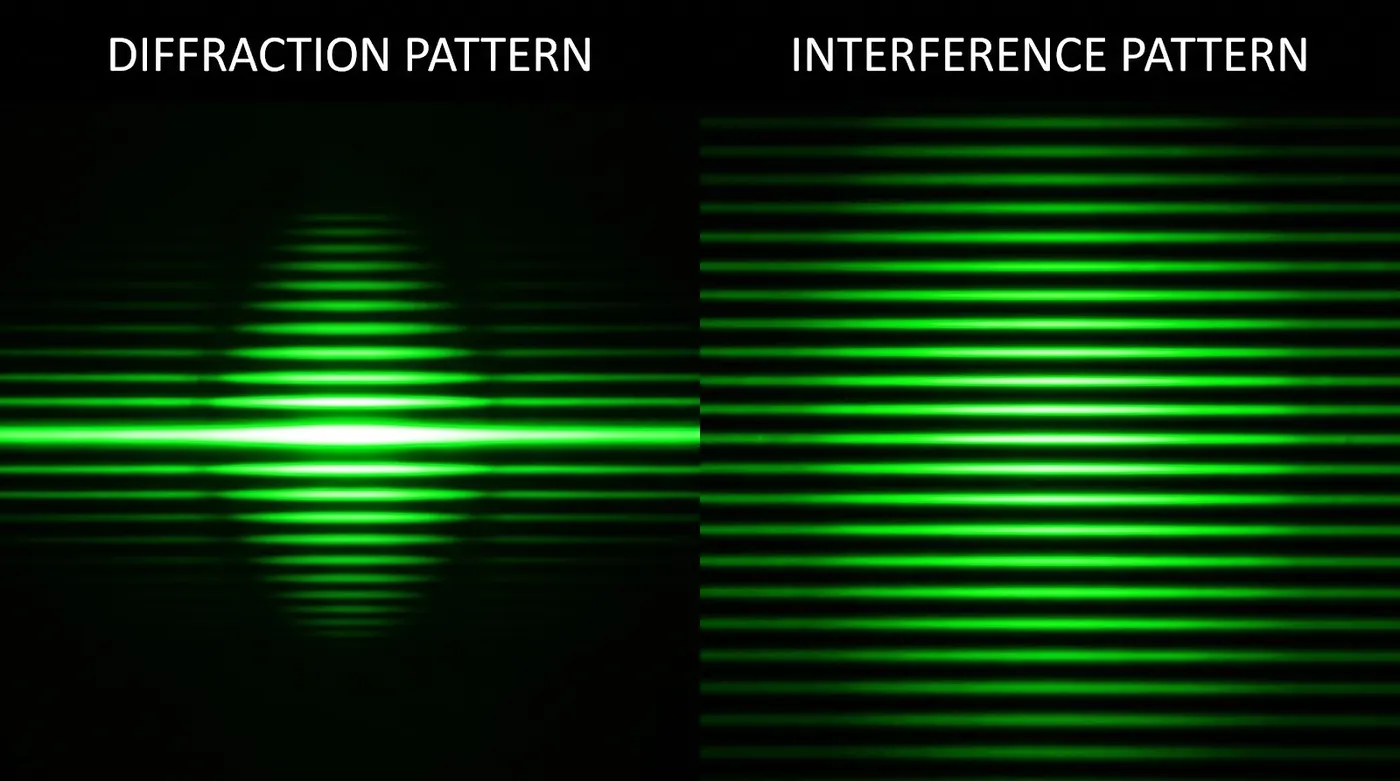
Quantum algorithms are often described as trying all possibilities at once. This is misleading. A better description is that quantum algorithms use superposition, interference, and entanglement together to make the correct answer emerge from a quantum state with high probability. This tutorial explains how those three ingredients combine.
The Three Ingredients
Every quantum speedup relies on some combination of three physical phenomena:
- Superposition: A qubit can be in a weighted combination of 0 and 1. An n-qubit register can hold a superposition over all 2^n possible n-bit strings at once.
- Interference: Amplitudes can cancel or reinforce. Wrong answers can be made to cancel; the correct answer is amplified.
- Entanglement: Correlations between qubits create global structure in the state that classical systems cannot reproduce efficiently.
Amplitudes vs. Probabilities
Before going further, you need a clear understanding of quantum amplitudes. This concept is the foundation for everything that follows.
A quantum state assigns a complex amplitude (alpha) to each basis state. Each amplitude has two components: a magnitude |alpha| and a phase angle(alpha). The probability of measuring a particular basis state is the square of the magnitude: |alpha|^2.
Here is the critical distinction: interference happens between amplitudes, not between probabilities. Amplitudes are complex numbers, so they can cancel each other out. Probabilities are non-negative real numbers, so they always add up.
Consider a concrete numerical example: a qubit that can reach the |0> state by two different paths, each contributing amplitude 1/2 (not 1/sqrt(2); each individual path is only part of the full transformation, so its contribution is smaller than a full-strength amplitude). When both paths agree in sign, they add up to 1/2 + 1/2 = 1, and the |0> outcome becomes certain. When they disagree in sign, they cancel to 1/2 - 1/2 = 0, and the |0> outcome becomes impossible.
To see exactly where those 1/2 contributions come from, start with a qubit in |0>, apply a Hadamard gate H. The state becomes (|0> + |1>)/sqrt(2). Now apply H again. The Hadamard transforms |0> to (|0> + |1>)/sqrt(2) and |1> to (|0> - |1>)/sqrt(2). So the |0> component gets amplitude (1/sqrt(2)) * (1/sqrt(2)) = 1/2 from the first path, and the |1> component also contributes amplitude (1/sqrt(2)) * (1/sqrt(2)) = 1/2 to |0>. The total amplitude on |0> is 1/2 + 1/2 = 1. Constructive interference: both paths add, and we get |0> with certainty.
Now consider a different circuit: start with |0>, apply H, then apply X (the NOT gate), then apply H. The X gate swaps |0> and |1>, so after H then X, the state is (|1> + |0>)/sqrt(2) = (|0> + |1>)/sqrt(2). Applying H again gives the same result as before: |0>. But what if we start with |1>? Apply H to get (|0> - |1>)/sqrt(2). The minus sign is the key. When we apply H to this state, the amplitude on |0> becomes 1/2 + (-1/2) = 0. Destructive interference: the paths cancel perfectly.
Here is Qiskit code that demonstrates both cases:
import numpy as np
from qiskit import QuantumCircuit
from qiskit.quantum_info import Statevector

# Case 1: Constructive interference (H then H)
qc1 = QuantumCircuit(1)
qc1.h(0)    # |0> -> (|0> + |1>) / sqrt(2)
qc1.h(0)    # Paths reinforce: amplitude on |0> = 1/2 + 1/2 = 1

sv1 = Statevector.from_instruction(qc1)
print("H then H (constructive):")
print(f"  Amplitudes: {sv1.data}")
print(f"  Probabilities: {sv1.probabilities()}")
# Output: [1.+0.j, 0.+0.j]  ->  |0> with probability 1.0

# Case 2: Destructive interference
# Start with |1>, apply H, then H again
qc2 = QuantumCircuit(1)
qc2.x(0)    # |0> -> |1>
qc2.h(0)    # |1> -> (|0> - |1>) / sqrt(2)
qc2.h(0)    # Paths cancel for |0>: 1/2 + (-1/2) = 0

sv2 = Statevector.from_instruction(qc2)
print("\nX then H then H (destructive on |0>):")
print(f"  Amplitudes: {sv2.data}")
print(f"  Probabilities: {sv2.probabilities()}")
# Output: [0.+0.j, 1.+0.j]  ->  |1> with probability 1.0
The takeaway: quantum algorithms succeed by arranging amplitudes so that correct answers experience constructive interference and wrong answers experience destructive interference. Probabilities cannot do this because they never cancel.
Step 1: Prepare a Superposition
Most quantum algorithms begin by preparing an equal superposition over all inputs. The Hadamard gate applied to every qubit in the |0> state does exactly this:
import numpy as np
from qiskit import QuantumCircuit, transpile
from qiskit_aer import AerSimulator

n = 3  # number of qubits
qc = QuantumCircuit(n)

# Apply Hadamard to every qubit
for i in range(n):
    qc.h(i)

# State is now: (|000> + |001> + |010> + ... + |111>) / sqrt(8)
# All 8 three-bit strings have equal amplitude 1/sqrt(8)
This step is conceptually like “exploring all inputs,” but the state is not 8 separate computations running in parallel. It is one quantum state that happens to have amplitude spread across all 8 basis states.
Visualizing Quantum States with Statevectors
Understanding quantum algorithms requires seeing the actual amplitudes at each step, not just the final measurement outcome. Qiskit provides the Statevector class for exactly this purpose.
Here is how to inspect the quantum state after each step of a simple two-qubit algorithm:
from qiskit import QuantumCircuit
from qiskit.quantum_info import Statevector

qc = QuantumCircuit(2)

# Step 0: initial state |00>
sv = Statevector.from_instruction(qc)
print("After initialization:")
for i, amp in enumerate(sv.data):
    label = f"|{i:02b}>"
    print(f"  {label}: amplitude = {amp:+.4f}, probability = {abs(amp)**2:.4f}")

# Step 1: apply H to both qubits -> equal superposition
qc.h(0)
qc.h(1)
sv = Statevector.from_instruction(qc)
print("\nAfter Hadamard on both qubits:")
for i, amp in enumerate(sv.data):
    label = f"|{i:02b}>"
    print(f"  {label}: amplitude = {amp:+.4f}, probability = {abs(amp)**2:.4f}")

# Step 2: apply a CZ gate (controlled-Z) to flip phase of |11>
qc.cz(0, 1)
sv = Statevector.from_instruction(qc)
print("\nAfter CZ gate (phase oracle marking |11>):")
for i, amp in enumerate(sv.data):
    label = f"|{i:02b}>"
    print(f"  {label}: amplitude = {amp:+.4f}, probability = {abs(amp)**2:.4f}")
The output shows that after the CZ gate, the amplitude of |11> flips from +0.5000 to -0.5000 while all other amplitudes stay at +0.5000. The probabilities are still all 0.25, confirming that the oracle alone changes nothing observable. Only interference (the diffusion step) converts this phase difference into a measurable amplitude difference.
Step 2: Apply the Problem as a Quantum Operation
The next step encodes the problem into the quantum state. Quantum algorithms must be expressed as unitary operations: reversible transformations that modify amplitudes without measuring the state.
A common pattern is the quantum oracle: a black-box unitary that marks correct answers by flipping their phase. For a Boolean function f(x):
Oracle: |x> --> (-1)^f(x) |x>
This flips the sign of the amplitude for any x where f(x) = 1 (the “correct” answers), leaving other amplitudes unchanged.
The Oracle Pattern in Depth
Oracles appear in nearly every quantum algorithm, but they come in several distinct forms. Understanding these forms clarifies how different algorithms work.
Phase Oracle
A phase oracle flips the sign (phase) of the target state:
|x> becomes (-1)^f(x) |x>
The state |x> itself does not change; only its amplitude picks up a minus sign when f(x) = 1. This is the oracle form that Grover’s algorithm uses directly.
from qiskit import QuantumCircuit

# Phase oracle marking |11> on 2 qubits
phase_oracle = QuantumCircuit(2, name="Phase Oracle")
phase_oracle.cz(0, 1)  # CZ flips phase when both qubits are |1>

print(phase_oracle.draw())
# q_0: ─■─
#        │
# q_1: ─■─
Bit-Flip Oracle
A bit-flip oracle stores the function value in an ancilla qubit:
|x>|0> becomes |x>|f(x)>
This oracle does not change the phase of |x>. Instead, it writes the answer into an extra qubit. This is often the more natural way to implement a function on a quantum computer, because classical Boolean logic (AND, OR, NOT) maps directly to quantum gates (Toffoli, CNOT, X).
# Bit-flip oracle for f(x) = x0 AND x1 (f = 1 only for |11>)
bitflip_oracle = QuantumCircuit(3, name="Bit-Flip Oracle")
# qubit 0, 1: input; qubit 2: ancilla initialized to |0>
bitflip_oracle.ccx(0, 1, 2)  # Toffoli: flips ancilla if both inputs are |1>

print(bitflip_oracle.draw())
# q_0: ──■──
#         │
# q_1: ──■──
#         │
# q_2: ──X──
Phase Kickback: Converting Bit-Flip to Phase Oracle
The most important trick in quantum algorithms is phase kickback. If you initialize the ancilla qubit in the |-> = (|0> - |1>)/sqrt(2) state, the bit-flip oracle automatically becomes a phase oracle. Here is why:
When f(x) = 1, the oracle flips the ancilla. But the ancilla is in |->. Flipping |-> gives -|->. That global minus sign migrates to the amplitude of |x>. The ancilla returns to |-> (unchanged up to global phase), and |x> picks up a phase flip.
from qiskit import QuantumCircuit
from qiskit.quantum_info import Statevector

# Phase kickback: bit-flip oracle + ancilla in |-> = phase oracle
kickback = QuantumCircuit(3)

# Prepare ancilla (qubit 2) in |-> state
kickback.x(2)
kickback.h(2)

# Prepare input in equal superposition
kickback.h(0)
kickback.h(1)

print("Before oracle:")
sv = Statevector.from_instruction(kickback)
# Show amplitudes for the input qubits (tracing out ancilla)
for i in range(4):
    label = f"|{i:02b}>"
    # Amplitudes for input states (ancilla is always |->)
    print(f"  {label}: {sv.data[i*1]:.4f}")

# Apply bit-flip oracle (Toffoli)
kickback.ccx(0, 1, 2)

print("\nAfter oracle (phase kickback):")
sv = Statevector.from_instruction(kickback)
for i in range(4):
    label = f"|{i:02b}>"
    print(f"  {label}: {sv.data[i*1]:.4f}")
# The |11> amplitude has flipped sign, just like a phase oracle
Phase oracles are preferred for amplitude amplification algorithms because they modify amplitudes directly, without changing the quantum state’s structure. The diffusion operator in Grover’s algorithm relies on this: it needs the marked state’s amplitude to be negative while the rest are positive, so that reflection about the mean amplifies the marked state.
Step 3: Interference Amplifies the Correct Answer
The key step is applying a transformation that converts the phase difference (created by the oracle) into a difference in amplitude magnitudes. This is interference.
In Grover’s algorithm, the diffusion operator reflects all amplitudes around their mean. After one oracle call, the target state has a negative amplitude while all others are positive. Reflecting around the mean makes the target amplitude larger and all others smaller:
from qiskit import QuantumCircuit, transpile
from qiskit_aer import AerSimulator
from qiskit.circuit.library import GroverOperator

# Build Grover's algorithm for a 3-qubit search
oracle = QuantumCircuit(3)
oracle.cz(0, 2)   # Marks states where qubits 0 and 2 are both |1>: |101> and |111>

grover_op = GroverOperator(oracle)
qc_grover = QuantumCircuit(3, 3)

# Initial Hadamards
qc_grover.h([0, 1, 2])

# 2 marked states in N=8: optimal iterations = 1
for _ in range(1):
    qc_grover.compose(grover_op, inplace=True)

qc_grover.measure([0, 1, 2], [0, 1, 2])

sim = AerSimulator()
result = sim.run(transpile(qc_grover, sim), shots=1000).result()
print(result.get_counts())
# {'101': ~500, '111': ~500} -- marked states dominate
After sqrt(N) iterations of the oracle plus diffusion, the target answer’s amplitude has grown from 1/sqrt(N) to close to 1. Measurement now gives the correct answer with high probability.
Grover’s Algorithm: Complete Numerical Walkthrough
To truly understand how interference works, let’s trace through Grover’s algorithm for n=2 qubits (N=4 states) step by step. With 1 marked state and N=4, exactly 1 iteration gives the correct answer with certainty.
Setup: Search for the state |11> among the four states {|00>, |01>, |10>, |11>}.
Step (a): Initial superposition. Apply H to both qubits starting from |00>.
Amplitude vector: [1/2, 1/2, 1/2, 1/2]
Every state has equal amplitude 1/2 and equal probability (1/2)^2 = 1/4.
Step (b): Oracle marks |11>. The phase oracle flips the sign of the |11> amplitude.
Amplitude vector: [1/2, 1/2, 1/2, -1/2]
The probabilities are unchanged: all still 1/4. The oracle alone produces no observable effect.
Step (c): Compute the mean amplitude.
Mean = (1/2 + 1/2 + 1/2 + (-1/2)) / 4 = 1/4
Step (d): Diffusion (reflect about the mean). The diffusion operator maps each amplitude a to 2*mean - a:
- |00>: 2*(1/4) - 1/2 = 1/2 - 1/2 = 0
- |01>: 2*(1/4) - 1/2 = 0
- |10>: 2*(1/4) - 1/2 = 0
- |11>: 2*(1/4) - (-1/2) = 1/2 + 1/2 = 1
Amplitude vector: [0, 0, 0, 1]
The target state |11> has amplitude 1. All others have amplitude 0. One iteration, 100% success probability.
Why does exactly 1 iteration work for N=4? The optimal number of Grover iterations is approximately (pi/4) * sqrt(N/M), where M is the number of marked states. For N=4 and M=1, this is (pi/4) * 2 = pi/2 ≈ 1.57. The rotation angle per iteration is 2arcsin(1/sqrt(4)) = 2arcsin(1/2) = pi/3 ≈ 60 degrees. Starting from arcsin(1/2) = 30 degrees, one iteration brings us to 90 degrees, which corresponds to amplitude 1 on the target. This exact alignment happens only for N=4 with 1 marked state.
Let’s verify with Qiskit:
from qiskit import QuantumCircuit
from qiskit.quantum_info import Statevector

# Build Grover for 2 qubits, marking |11>
qc = QuantumCircuit(2)

# Step (a): equal superposition
qc.h(0)
qc.h(1)

sv = Statevector.from_instruction(qc)
print("After superposition:", np.round(sv.data, 4))
# [0.5, 0.5, 0.5, 0.5]

# Step (b): oracle marks |11> with a phase flip
qc.cz(0, 1)

sv = Statevector.from_instruction(qc)
print("After oracle:       ", np.round(sv.data, 4))
# [0.5, 0.5, 0.5, -0.5]

# Step (d): diffusion operator (reflect about mean)
# Diffusion = H tensor H . (2|0><0| - I) . H tensor H
qc.h(0)
qc.h(1)
qc.z(0)
qc.z(1)
qc.cz(0, 1)
qc.h(0)
qc.h(1)

sv = Statevector.from_instruction(qc)
print("After diffusion:    ", np.round(sv.data, 4))
# [0, 0, 0, 1]   -> |11> with probability 1.0

print("\nProbabilities:", sv.probabilities())
# [0, 0, 0, 1]
The simulation confirms the hand calculation: after one Grover iteration, the |11> state has amplitude 1 and all others have amplitude 0.
Step 4: Measure to Extract the Answer
Measurement collapses the quantum state to a single classical bit string. Because interference has amplified the correct answer, measurement is likely to produce it.
Quantum algorithms typically require multiple measurements (shots) to build confidence in the result, especially for approximate algorithms like QAOA or VQE. For exact algorithms like Grover’s, a small number of measurements suffices if the success probability is close to 1.
# After measurement, count the results
from collections import Counter

# Simulated ideal result
counts = {'101': 950, '000': 10, '001': 8, '010': 9, '011': 8,
          '100': 7, '110': 4, '111': 4}

most_common = max(counts, key=counts.get)
print(f"Most likely answer: {most_common}")  # 101
Why Measurement Destroys the State
Measurement in quantum mechanics is not a passive observation. When you measure a qubit, you force it to commit to either |0> or |1>. The superposition collapses, and the amplitude information is gone forever.
This has a profound consequence: you cannot clone a quantum state. The no-cloning theorem proves that no physical process can copy an arbitrary unknown quantum state. You cannot make a backup of your quantum register, measure the copy, and keep the original. This means every quantum algorithm must extract its answer from a single measurement (or a small number of repeated runs of the entire algorithm).
Quantum algorithms deal with this constraint in two ways:
-
Exact algorithms arrange interference so that the correct answer has probability 1 (or very close to 1). Deutsch’s algorithm is the cleanest example: the answer is deterministic.
-
Probabilistic algorithms accept that each run has some probability of giving the wrong answer and use repetition to boost confidence.
For Deutsch’s algorithm, exactly 1 measurement gives the answer with certainty:
from qiskit import QuantumCircuit, transpile
from qiskit_aer import AerSimulator

# Deutsch's algorithm: balanced function
qc = QuantumCircuit(2, 1)
qc.x(1)
qc.h(0)
qc.h(1)
qc.cx(0, 1)   # Balanced oracle
qc.h(0)
qc.measure(0, 0)

sim = AerSimulator()
result = sim.run(transpile(qc, sim), shots=1).result()
print(result.get_counts())
# {'1': 1} -- one shot, one definitive answer
For Grover’s algorithm on larger problems, the success probability after the optimal number of iterations is close to (but not exactly) 1. Running the algorithm k times and taking the most frequent outcome gives a failure probability that drops exponentially in k. With 10 shots and success probability 0.95, the chance of never seeing the correct answer is (0.05)^10 ≈ 10^(-13).
A Minimal Working Example: Deutsch’s Algorithm
Deutsch’s algorithm is the simplest quantum algorithm that demonstrates a genuine advantage. It determines whether a one-bit Boolean function f(0), f(1) is constant (both outputs equal) or balanced (one output 0, one output 1) using one query. Classically this requires two queries.
from qiskit import QuantumCircuit, transpile
from qiskit_aer import AerSimulator

def deutsch_algorithm(f_type='balanced'):
    """
    f_type: 'constant' (always 0) or 'balanced' (f(0) != f(1))
    Deutsch's algorithm determines the type with 1 oracle query.
    """
    qc = QuantumCircuit(2, 1)  # 2 qubits: input qubit 0, ancilla qubit 1

    # Initialize: |0>|1>
    qc.x(1)

    # Apply Hadamard to both
    qc.h(0)
    qc.h(1)

    # Oracle: for 'balanced', apply CNOT (f(x) = x)
    if f_type == 'balanced':
        qc.cx(0, 1)   # f(x) = x: balanced

    # Apply Hadamard to qubit 0
    qc.h(0)

    # Measure qubit 0: 0 = constant, 1 = balanced
    qc.measure(0, 0)
    return qc

sim = AerSimulator()

for ftype in ['constant', 'balanced']:
    qc = deutsch_algorithm(ftype)
    result = sim.run(qc, shots=100).result()
    counts = result.get_counts()
    print(f"f is {ftype}: measurement = {counts}")
    # constant -> {'0': 100}
    # balanced -> {'1': 100}
One oracle query, one definitive answer. The algorithm works because the Hadamard + oracle + Hadamard sequence creates interference that completely cancels the wrong answer’s amplitude.
Simon’s Algorithm: A Bridge Between Simple and Powerful
Simon’s algorithm sits between Deutsch’s algorithm (1 qubit, toy problem) and Grover’s or Shor’s (full-power quantum advantage). It solves a specific problem with an exponential speedup, which makes it historically important: it inspired the development of Shor’s algorithm.
The problem: Given a function f: {0,1}^n -> {0,1}^n with the promise that there exists a secret string s such that f(x) = f(y) if and only if y = x XOR s, find s. (If s = 0…0, the function is one-to-one.)
Classical cost: Any classical algorithm requires O(2^(n/2)) queries to f (birthday paradox bound).
Quantum cost: O(n) queries. Exponentially faster.
The circuit has this structure:
- Prepare two n-qubit registers, both in |0>
- Apply H to all qubits in the first register (superposition over all inputs)
- Apply the oracle: |x>|0> becomes |x>|f(x)>
- Apply H to all qubits in the first register again
- Measure the first register
Each measurement produces a random string y that satisfies y . s = 0 (dot product mod 2). After collecting n-1 linearly independent strings, solve the linear system to find s.
import numpy as np
from qiskit import QuantumCircuit, transpile
from qiskit_aer import AerSimulator

def simons_circuit(s):
    """Build Simon's circuit for a secret string s (given as a list of bits)."""
    n = len(s)
    qc = QuantumCircuit(2 * n, n)

    # Step 1: Hadamard on first register
    for i in range(n):
        qc.h(i)

    # Step 2: Oracle for f(x) = f(x XOR s)
    # Simple implementation: copy first register to second, then
    # XOR the secret string into the second register for specific input patterns
    # First, copy x to second register
    for i in range(n):
        qc.cx(i, n + i)

    # Then apply the secret: if s[i] = 1, XOR qubit n+i with the first
    # qubit that has s[j] = 1 (this makes f(x) = f(x XOR s))
    first_one = None
    for i in range(n):
        if s[i] == 1:
            if first_one is None:
                first_one = i
            else:
                qc.cx(first_one, n + i)

    # Step 3: Hadamard on first register again
    for i in range(n):
        qc.h(i)

    # Step 4: Measure first register
    for i in range(n):
        qc.measure(i, i)

    return qc

# Example: 3-qubit Simon's with secret s = [1, 1, 0] (binary "110")
s = [1, 1, 0]
qc = simons_circuit(s)

sim = AerSimulator()
result = sim.run(transpile(qc, sim), shots=20).result()
counts = result.get_counts()
print(f"Secret string s = {s}")
print(f"Measurement results: {counts}")
# All results y satisfy y . s = 0 (mod 2)
# For s = [1,1,0]: valid y values are 000, 110, 001, 111
# (because y0*1 + y1*1 + y2*0 = 0 mod 2 means y0 = y1)

# Verify: check that all measured strings are orthogonal to s
for bitstring in counts.keys():
    y = [int(b) for b in reversed(bitstring)]  # Qiskit uses little-endian
    dot = sum(yi * si for yi, si in zip(y, s)) % 2
    print(f"  y={y}, y.s = {dot}")  # Should always be 0
The interference step (the second set of Hadamard gates) is what gives Simon’s algorithm its power. After the oracle, the first register is entangled with the second. The Hadamard gates create interference that constrains the measurement outcomes to the subspace orthogonal to s. Each measurement gives one linear equation; n-1 independent equations determine s uniquely.
The Quantum Fourier Transform as Interference Engine
The Quantum Fourier Transform (QFT) is the interference mechanism behind Shor’s algorithm, quantum phase estimation, and many other powerful quantum algorithms. It converts periodic patterns in amplitude into sharp peaks in the measurement basis.
The QFT maps a quantum state |j> to a superposition of all basis states with phases that depend on j:
QFT|j> = (1/sqrt(N)) * sum_k exp(2piijk/N) |k>
The key property: if the input state has a periodic structure (amplitudes repeat with some period r), the QFT concentrates amplitude on basis states that are multiples of N/r. This converts a hidden period into a measurable quantity.
Here is a concrete example. Create a state with period-2 structure (alternating amplitudes), and show that the QFT concentrates all amplitude on even-indexed basis states:
import numpy as np
from qiskit import QuantumCircuit
from qiskit.circuit.library import QFT
from qiskit.quantum_info import Statevector

n = 3  # 3 qubits, N = 8 states

# Create a state with period-2 structure:
# amplitude on |000>, |010>, |100>, |110> (even indices: 0, 2, 4, 6)
# This has period 2 in the bit pattern of the last qubit
qc_before = QuantumCircuit(n)
qc_before.h(1)    # Superposition on qubit 1
qc_before.h(2)    # Superposition on qubit 2
# Qubit 0 stays |0>, so only even-index states have amplitude

sv_before = Statevector.from_instruction(qc_before)
print("Before QFT (period-2 input):")
for i in range(2**n):
    amp = sv_before.data[i]
    if abs(amp) > 1e-10:
        print(f"  |{i:03b}> (index {i}): amplitude = {amp:.4f}")

# Now apply QFT
qc_after = qc_before.copy()
qc_after.append(QFT(n), range(n))

sv_after = Statevector.from_instruction(qc_after)
print("\nAfter QFT:")
for i in range(2**n):
    amp = sv_after.data[i]
    prob = abs(amp)**2
    if prob > 1e-10:
        print(f"  |{i:03b}> (index {i}): amplitude = {amp:.4f}, prob = {prob:.4f}")

# The QFT concentrates amplitude on states related to the period
# For a period-2 input on 8 states, peaks appear at multiples of 8/2 = 4
# i.e., at indices 0 and 4
In Shor’s algorithm, the QFT plays this exact role. After modular exponentiation creates a periodic pattern in the quantum register, the QFT extracts the period. The period of the modular exponentiation function directly reveals the factors of the number being factored.
The Structure of Quantum Speedup
Not every problem benefits from a quantum algorithm. Quantum speedups arise when:
- The problem has a structure that a quantum oracle can exploit
- Interference can be arranged to amplify the correct answer
- The speedup outweighs the overhead of quantum hardware error rates
Known categories of quantum speedup:
| Algorithm type | Example | Classical cost | Quantum cost |
|---|---|---|---|
| Search (unstructured) | Grover | O(N) | O(sqrt(N)) |
| Factoring | Shor | Sub-exponential | Polynomial |
| Phase estimation | QPE | N/A | Polynomial |
| Simulation | VQE, Trotter | Exponential | Polynomial |
| Linear systems | HHL | Polynomial | Polylogarithmic* |
*with caveats about input/output access
Algorithm Categories and Their Interference Mechanisms
Each category of quantum algorithm uses a distinct interference mechanism. Understanding these mechanisms explains why different algorithms achieve different types of speedup.
Grover’s search (quadratic speedup): The oracle marks the target state with a phase flip. The diffusion operator reflects all amplitudes about their mean. This reflection-about-mean acts as an amplitude amplification step, rotating the state vector toward the target by a fixed angle each iteration. After O(sqrt(N)) iterations, the rotation reaches the target. The speedup is quadratic because the rotation angle per step is O(1/sqrt(N)).
Shor’s factoring (exponential speedup): Modular exponentiation creates a quantum state with periodic amplitude structure. The QFT converts this hidden periodicity into sharp peaks at measurable positions. The classical reduction from factoring to period-finding (via number theory) completes the algorithm. The exponential speedup comes from the QFT efficiently extracting a period that classical algorithms cannot find without essentially checking exponentially many values.
Quantum Phase Estimation (polynomial): Phase kickback encodes the eigenvalue of a unitary operator into the phase of an ancilla register. The inverse QFT then converts this phase into a binary representation that can be measured directly. QPE is a subroutine inside many other algorithms (Shor’s, HHL) rather than a standalone application.
Quantum simulation (exponential speedup for specific systems): The Trotter-Suzuki product formula approximates the time evolution operator exp(-iHt) by breaking it into small steps, each of which applies a few quantum gates. Because quantum systems naturally evolve via quantum mechanics, simulating them on a quantum computer avoids the exponential blowup that classical computers face when representing the full quantum state. The interference here is the physical time evolution itself.
HHL for linear systems (exponential speedup with caveats): QPE decomposes the input vector into eigenstates of the matrix A. Controlled rotations invert each eigenvalue (replacing lambda with 1/lambda). Inverse QPE uncomputes the eigenvalue register. The result is a quantum state proportional to A^(-1)|b>. The exponential speedup applies only when the input and output can be prepared and read as quantum states, which limits practical applicability.
Variational Quantum Algorithms: VQE and QAOA
Not all quantum algorithms follow the oracle-plus-interference pattern. Variational quantum algorithms take a fundamentally different approach that makes them suitable for today’s noisy, imperfect quantum hardware.
The idea: use a parameterized quantum circuit (called an ansatz) to prepare a trial quantum state. Measure the state to evaluate a cost function (like the energy of a molecule). Feed the result to a classical optimizer that adjusts the circuit parameters. Repeat until the cost function converges to a minimum.
This is a hybrid classical-quantum loop. The quantum computer’s role is to prepare and measure quantum states that are hard to simulate classically. The classical computer’s role is to navigate the parameter landscape.
Why this works on noisy hardware: Pure quantum algorithms like Grover’s and Shor’s require long, deep circuits with many sequential gates. Each gate introduces a small error, and these errors accumulate. Variational algorithms use shallow circuits (few sequential gates), which limits error accumulation. The classical optimizer can partially compensate for systematic noise.
Here is a minimal VQE example that finds the ground state energy of the ZZ observable (the tensor product of two Pauli-Z operators):
import numpy as np
from qiskit import QuantumCircuit, transpile
from qiskit_aer import AerSimulator

def vqe_circuit(theta):
    """Parameterized ansatz for 2 qubits."""
    qc = QuantumCircuit(2)
    qc.ry(theta[0], 0)    # Rotation on qubit 0
    qc.ry(theta[1], 1)    # Rotation on qubit 1
    qc.cx(0, 1)           # Entangling gate
    qc.ry(theta[2], 0)    # Another rotation
    qc.ry(theta[3], 1)
    return qc

def measure_zz(theta, shots=1000):
    """Measure the expectation value of ZZ."""
    qc = vqe_circuit(theta)
    qc.measure_all()

    sim = AerSimulator()
    result = sim.run(transpile(qc, sim), shots=shots).result()
    counts = result.get_counts()

    # ZZ eigenvalue is +1 for |00>, |11> and -1 for |01>, |10>
    expectation = 0
    for bitstring, count in counts.items():
        bits = [int(b) for b in bitstring]
        eigenvalue = 1 if bits[0] == bits[1] else -1
        expectation += eigenvalue * count / shots
    return expectation

# Simple grid search (a real VQE uses scipy.optimize or similar)
best_energy = float('inf')
best_params = None

np.random.seed(42)
for _ in range(200):
    theta = np.random.uniform(0, 2 * np.pi, 4)
    energy = measure_zz(theta)
    if energy < best_energy:
        best_energy = energy
        best_params = theta

print(f"Best energy found: {best_energy:.4f}")
print(f"Exact ground state energy of ZZ: -1.0")
# The optimizer finds energy close to -1.0
# The ground state of ZZ is (|01> + |10>)/sqrt(2), eigenvalue -1
VQE and QAOA sacrifice the guaranteed speedup of algorithms like Shor’s in exchange for practical runnability on current hardware. Whether they provide a genuine quantum advantage for useful problems remains an active research question.
Why Quantum Algorithms Are Hard to Design
The challenge of quantum algorithm design is constructing the interference step. You need:
- An oracle that encodes the problem as a phase flip (or similar)
- A diffusion or transform that converts phase differences into amplitude differences
- A circuit depth shallow enough to run before errors corrupt the state
Most problems do not have known quantum speedups because we do not know how to construct the interference step efficiently. Finding new quantum algorithms is an active research area.
The Limits of Quantum Speedup
Quantum computing is powerful, but it is not magic. Several fundamental and practical limitations constrain what quantum algorithms can achieve.
Finding the right interference pattern is hard. A quantum speedup requires discovering a mathematical structure in the problem that interference can exploit. For factoring, that structure is periodicity in modular arithmetic (discovered by Shor). For unstructured search, it is the reflection-about-mean trick (discovered by Grover). For most combinatorial optimization problems, no one has found the right interference pattern, and it is an open question whether one exists.
Not all problems have known quantum speedups. Quantum computers excel at specific structured problems. For many everyday computing tasks (sorting, web serving, file I/O, most machine learning), there is no known quantum advantage. The set of problems with proven quantum speedups is small relative to the universe of computational problems.
Overhead matters. Even when a quantum algorithm has an exponential speedup in query complexity, the constant factors can be enormous. Shor’s algorithm for factoring a 2048-bit RSA key requires thousands of logical qubits, each of which requires hundreds to thousands of physical qubits for error correction. Published resource estimates for the total physical qubit count have come down over the years but still sit around a million or more, far beyond any machine that exists. Classical algorithms, while exponentially slower asymptotically, handle current key sizes comfortably with existing hardware.
Error rates impose depth limits. Current quantum hardware has gate error rates around 0.1% to 1%. A circuit with 1000 sequential gates accumulates enough error to destroy the quantum state. This limits which algorithms can run on near-term hardware. Only shallow circuits (like those in VQE/QAOA) are practical today; deep circuits (like Shor’s for large numbers) require fault-tolerant hardware that does not yet exist.
Classical pre- and post-processing add cost. Quantum algorithms rarely run in isolation. Shor’s algorithm requires classical number theory to set up the modular exponentiation and to extract factors from the measured period. Grover’s requires classical verification of the answer. These classical steps contribute to the total runtime.
BQP vs BPP: the big open question. BQP (Bounded-Error Quantum Polynomial Time) is the class of problems that quantum computers can solve efficiently. BPP (Bounded-Error Probabilistic Polynomial Time) is the class that classical computers can solve efficiently. Everyone expects BQP to be strictly larger than BPP (otherwise quantum computers offer no speedup at all), but no one has proven this. It remains one of the major open problems in computational complexity theory.
Connecting to Physical Qubits
Everything discussed so far describes quantum algorithms abstractly, using mathematical objects like state vectors and unitary matrices. But these abstractions correspond to real physical systems.
Superposition corresponds to a physical qubit existing in a quantum state. In a superconducting transmon qubit (used by IBM and Google), the qubit is a circuit element that oscillates at microwave frequencies; the |0> and |1> states correspond to different energy levels of this oscillator. In a trapped ion qubit (used by IonQ and Quantinuum), the |0> and |1> states correspond to different electronic energy levels of a single atom held in place by electric fields.
Interference corresponds to coherent evolution of the qubit’s physical state. Applying a gate means sending a precisely timed microwave pulse (for transmons) or laser pulse (for trapped ions) that rotates the qubit’s state on the Bloch sphere. The pulse must be extremely precise; small errors accumulate across many gates.
Measurement corresponds to a physical interaction that destroys coherence. For a transmon, measurement involves sending a microwave probe signal through a coupled resonator and detecting the reflected signal; the resonator’s response differs depending on whether the qubit is in |0> or |1>. For a trapped ion, measurement involves shining a laser tuned to a transition from |1>; if the ion fluoresces, it was in |1>.
Decoherence corresponds to unintended “measurements” by the environment. If a stray photon interacts with the qubit, or if thermal fluctuations disturb the circuit, the qubit’s superposition partially collapses. The timescale over which this happens (the coherence time T2) sets a hard limit on how many gates you can apply before the quantum state becomes useless noise. Current transmon qubits have T2 times of roughly 100 microseconds, which allows a few thousand gates before coherence is lost. This is why quantum computers must be cooled to temperatures colder than outer space (about 15 millikelvin for transmons) and shielded from electromagnetic interference.
Error correction codes (like the surface code) combat decoherence by encoding one logical qubit across many physical qubits. If one physical qubit decoheres, the logical qubit survives. But the overhead is significant: current estimates suggest 1000 or more physical qubits per logical qubit for useful error correction thresholds.
Common Misconceptions
Several widespread beliefs about quantum computing are either wrong or seriously misleading. Clearing these up is essential for understanding what quantum algorithms actually do.
“Quantum computers try all answers simultaneously.” This is the most common misconception. A quantum computer in superposition does have amplitude on all basis states, but measurement returns only one outcome. There is no way to “read out all the answers.” The power of quantum computing comes from interference, which selectively amplifies correct answers before measurement. Without the right interference pattern, the superposition is useless.
“Quantum computers speed up everything.” Only problems with specific mathematical structure benefit from quantum algorithms. Sorting a list, rendering graphics, training most neural networks, and serving web pages have no known quantum speedup. Quantum algorithms excel at structured mathematical problems: factoring, searching, simulating quantum systems, and solving certain linear algebra problems.
“Entanglement allows faster-than-light communication.” Entanglement creates correlations between qubits, but the no-communication theorem proves that measuring one entangled qubit cannot transmit information to the holder of the other qubit. The correlations only become apparent when both parties compare their measurement results (which requires classical communication). Entanglement is a resource for quantum algorithms and quantum cryptography, not a communication channel.
“A qubit is just a classical bit that is uncertain.” A classical coin flip produces a state that is either heads or tails; you just do not know which. A qubit in superposition is fundamentally different: it has complex amplitudes that can interfere. No classical probability distribution can reproduce the interference patterns that quantum states produce. If qubits were merely uncertain classical bits, quantum algorithms would not work, because classical uncertainty does not allow destructive interference.
“Quantum computers will replace classical computers.” Quantum computers are specialized co-processors, analogous to GPUs. They accelerate specific workloads while classical computers handle general computation, I/O, networking, and the vast majority of software. Even in a future with large-scale fault-tolerant quantum computers, most computing will remain classical. The quantum processor handles the specific subroutine where quantum speedup applies, and the classical computer handles everything else.
Next Steps
- Grover’s Algorithm Explained: the canonical search algorithm
- Quantum Fourier Transform (Qiskit): the interference engine behind Shor’s algorithm
- VQE Explained: variational quantum algorithms that work on near-term hardware