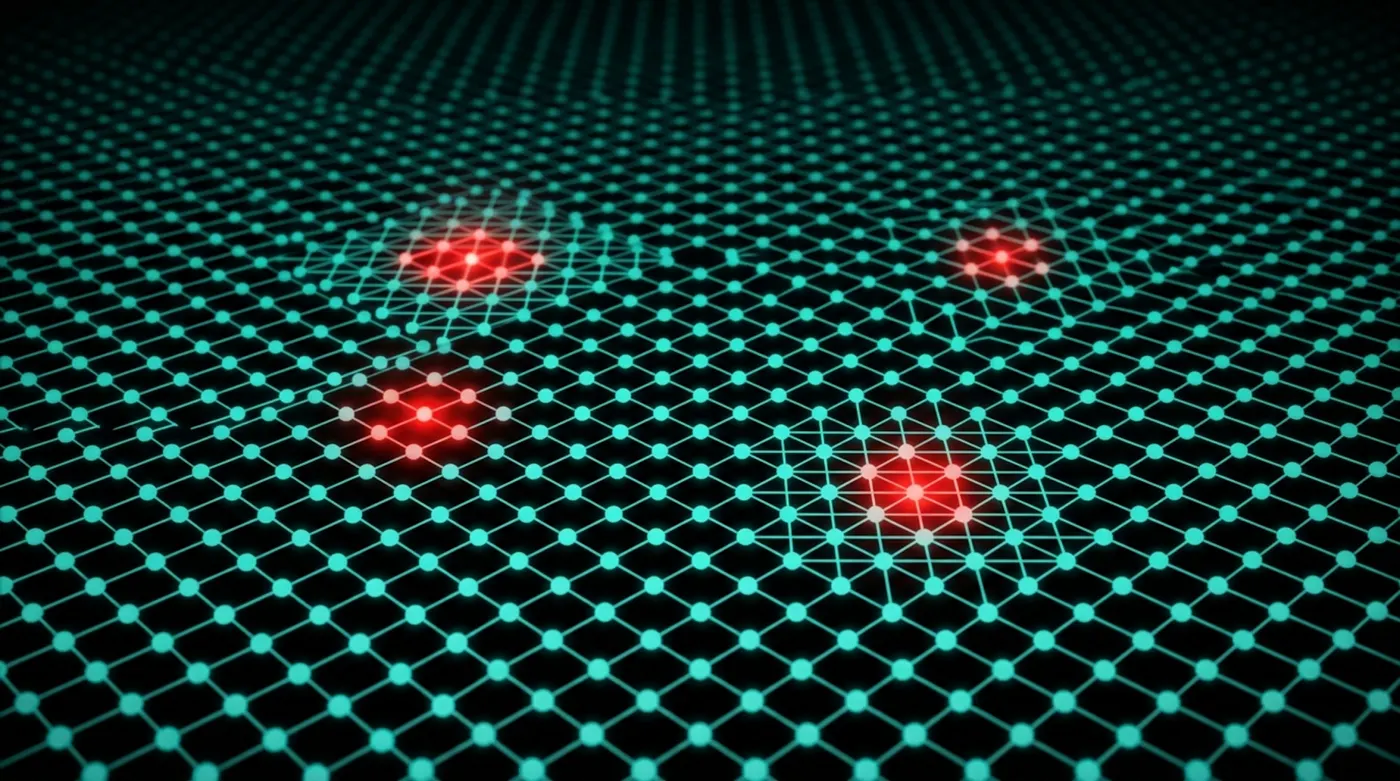
The surface code is the dominant approach to fault-tolerant quantum computing. Google demonstrated it experimentally in 2023, IBM has it on the roadmap for every major hardware generation, and Microsoft’s topological qubit effort ultimately targets a compatible architecture. Understanding why the surface code won the race among quantum error-correcting codes is essential background for anyone serious about fault-tolerant computation.
Why the Surface Code
Many quantum error-correcting codes exist. The Shor code was first; the Steane code is more efficient; the Reed-Solomon family has classical pedigree. The surface code beats them in one critical dimension: hardware compatibility.
Every other leading code requires long-range entangling gates between qubits that may be far apart on a chip. The surface code needs only nearest-neighbor two-qubit gates. On a 2D grid, every required interaction is between physically adjacent qubits. That means you can lay it out directly on a superconducting processor or trapped-ion array without routing overhead.
Additional advantages:
- Highest known threshold: roughly 1% physical error rate. Below this threshold, increasing code distance exponentially suppresses the logical error rate.
- Single type of ancilla: every syndrome measurement follows the same template.
- Flexible geometry: boundaries can be shaped to implement logical gates between code blocks (lattice surgery).
The 2D Lattice
A distance-d surface code is arranged on a (d x d) grid of data qubits (open circles below) with ancilla qubits (X-type on faces, Z-type on edges) interspersed. For d=3:
  X   X
 o-o-o
Z| F |Z| F |Z
 o-o-o
Z| F |Z| F |Z
 o-o-o
  X   X
More precisely, label data qubits by their grid position. Faces (plaquettes) in the interior each touch exactly 4 data qubits. Boundary plaquettes touch 2 or 3. Ancilla qubits sit at face centers and edge midpoints.
d=3 data qubit layout (9 data qubits):

  D(0,0) -- D(1,0) -- D(2,0)
    |    [A_X]  |   [A_X]  |
  D(0,1) -- D(1,1) -- D(2,1)
    |    [A_X]  |   [A_X]  |
  D(0,2) -- D(1,2) -- D(2,2)

[A_Z] ancillas sit on the horizontal edges between rows.
[A_X] ancillas sit on the square faces.
A distance-3 surface code has:
- 9 data qubits
- 4 X-type ancilla qubits (faces)
- 4 Z-type ancilla qubits (edges)
- 8 total stabilizers
- 1 encoded logical qubit
The general formula: a distance-d surface code has d^2 data qubits, (d^2 - 1) ancilla qubits, and encodes 1 logical qubit.
X Stabilizers (Face Operators)
Each X-type ancilla measures the product of X on its 4 neighboring data qubits:
A_X stabilizer:   X -- X
                  |    |
                  X -- X
The measurement outcome is +1 (the code is in the +1 eigenspace of this operator) when no Z error has crossed the face, and -1 when an odd number of Z errors has crossed it.
Physically: the ancilla qubit is prepared in |+>, then CNOT-ed (ancilla as control) onto each of its 4 neighbors, then measured in the X basis. A -1 result is called a defect or anyonic excitation.
Z errors create pairs of X-stabilizer defects at the two faces they separate. The decoder’s job is to identify which Z errors produced which defect pairs.
Z Stabilizers (Star Operators)
Z-type ancillas sit on the grid edges and measure the product of Z on their neighboring data qubits:
A_Z stabilizer:   Z
                  |
              Z --+-- Z
                  |
                  Z
The measurement outcome is +1 when no X error has crossed this vertex, and -1 when an X error is present. X errors create pairs of Z-stabilizer defects.
The syndrome extraction circuit for one Z stabilizer:
from qiskit import QuantumCircuit

def z_stabilizer_measurement(data_qubits, ancilla_qubit, qc):
    """
    Measure a Z stabilizer on up to 4 data qubits.
    data_qubits: list of qubit indices (length 2, 3, or 4)
    ancilla_qubit: index of the ancilla qubit
    """
    # Ancilla starts in |0>
    # CX from each data qubit onto ancilla measures parity of Z
    for dq in data_qubits:
        qc.cx(dq, ancilla_qubit)
    return qc
Logical Operators
The surface code encodes one logical qubit. Its logical X and Z operators are chains of physical operators connecting opposite boundaries:
- Logical X: a horizontal chain of X operators connecting the left boundary to the right boundary.
- Logical Z: a vertical chain of Z operators connecting the top boundary to the bottom boundary.
For d=3, logical X is X on (0,1), (1,1), (2,1), the middle row. Logical Z is Z on (1,0), (1,1), (1,2), the middle column.
Any chain that connects opposite boundaries implements the logical operator. Chains that close on themselves (loops) are stabilizers and have no logical effect. This is the topological nature of the code: logical information is encoded in the global topology of error chains, not in any local degree of freedom.
The Error Correction Cycle
One QEC cycle consists of:
- Syndrome extraction: measure all stabilizers in parallel. This takes a fixed number of two-qubit gate layers (4 for bulk stabilizers) regardless of d.
- Classical decoding: feed the binary syndrome pattern to a decoder. The standard decoder is minimum-weight perfect matching (MWPM), which finds the lowest-weight set of errors consistent with the observed defects.
- Correction: apply the physical corrections identified by the decoder, or update a Pauli frame (track corrections classically rather than applying them).
import numpy as np

def mwpm_decode_simple(syndrome_x, syndrome_z, distance):
    """
    Toy MWPM decoder for a surface code.
    syndrome_x: array of 0/1 values for X-type defects (detects Z errors)
    syndrome_z: array of 0/1 values for Z-type defects (detects X errors)
    Returns suggested corrections as lists of qubit indices.

    In production, use PyMatching (pip install pymatching) which implements
    a full MWPM decoder with O(n log n) complexity.
    """
    x_defect_positions = np.argwhere(syndrome_x == 1)
    z_defect_positions = np.argwhere(syndrome_z == 1)
    # Pair defects greedily (real MWPM uses Blossom algorithm)
    corrections_z = []
    corrections_x = []
    # Placeholder: real implementation calls pymatching.Matching
    return corrections_z, corrections_x
In practice, use the PyMatching library, which implements the Blossom algorithm and runs in microseconds per syndrome, fast enough for real-time decoding.
Code Distance and Error Threshold
A distance-d surface code corrects any combination of up to floor((d-1)/2) errors. More importantly, it has a threshold: a critical physical error rate p_th (approximately 1% for depolarizing noise) below which the logical error rate decreases as d increases.
Above threshold: adding more qubits makes things worse. Below threshold: the logical error rate scales approximately as:
p_L ~ (p / p_th)^((d+1)/2)
At a physical error rate of p = 0.1%:
| Distance | Physical qubits | Logical error rate per cycle |
|---|---|---|
| 3 | 9 | ~10^-4 |
| 5 | 25 | ~10^-7 |
| 7 | 49 | ~10^-10 |
| 11 | 121 | ~10^-16 |
Useful fault-tolerant computation (running Shor’s algorithm on cryptographically relevant key sizes) needs logical error rates below 10^-12 per cycle. Distance 7-11 achieves that, given physical error rates near 0.1%.
Resource Overhead
Current superconducting two-qubit gate error rates are roughly 0.1-0.5%. At 0.1%, a distance-7 surface code requires 49 data qubits + 48 ancilla qubits = 97 physical qubits per logical qubit, plus classical decoding and control overhead.
Running Shor’s algorithm for 2048-bit RSA requires on the order of 4000 logical qubits and billions of logical gate operations. At 100 physical qubits per logical qubit, that is roughly 400,000 physical qubits, all operating below the threshold. This is why fault-tolerant quantum computing is a hardware challenge as much as a software one.
Qiskit Sketch: Distance-3 Stabilizer Circuit
from qiskit import QuantumCircuit, QuantumRegister, ClassicalRegister

def build_d3_surface_code_cycle():
    """
    Simplified one-round syndrome extraction for a distance-3 surface code.
    Uses 9 data qubits (d0-d8) and 8 ancilla qubits (ax0-ax3, az0-az3).
    Layout (data qubit indices):
        0 - 1 - 2
        3 - 4 - 5
        6 - 7 - 8
    X stabilizers (faces): {0,1,3,4}, {1,2,4,5}, {3,4,6,7}, {4,5,7,8}
    Z stabilizers (edges): {0,3}, {1,2}, {3,6}, {5,8}  (boundary, 2-qubit)
    """
    data    = QuantumRegister(9, "d")
    anc_x   = QuantumRegister(4, "ax")   # X-type ancillas
    anc_z   = QuantumRegister(4, "az")   # Z-type ancillas
    creg    = ClassicalRegister(8, "s")

    qc = QuantumCircuit(data, anc_x, anc_z, creg)

    # --- X stabilizer measurements (detect Z errors) ---
    # Each X ancilla: H, then 4x CNOT (ancilla->data), then H, measure
    x_stabs = [
        (0, [0, 1, 3, 4]),
        (1, [1, 2, 4, 5]),
        (2, [3, 4, 6, 7]),
        (3, [4, 5, 7, 8]),
    ]
    for ax_idx, d_idxs in x_stabs:
        qc.h(anc_x[ax_idx])
        for d in d_idxs:
            qc.cx(anc_x[ax_idx], data[d])
        qc.h(anc_x[ax_idx])

    # --- Z stabilizer measurements (detect X errors) ---
    # Each Z ancilla: 4x CNOT (data->ancilla), measure
    z_stabs = [
        (0, [0, 3]),
        (1, [1, 2]),
        (2, [3, 6]),
        (3, [5, 8]),
    ]
    for az_idx, d_idxs in z_stabs:
        for d in d_idxs:
            qc.cx(data[d], anc_z[az_idx])

    # Measure all ancillas
    for i in range(4):
        qc.measure(anc_x[i], creg[i])
    for i in range(4):
        qc.measure(anc_z[i], creg[4 + i])

    return qc

qc = build_d3_surface_code_cycle()
print(f"Surface code circuit: {qc.num_qubits} qubits, depth {qc.depth()}")
print(qc.count_ops())
This is a simplified single-round circuit. A production implementation would reset ancillas and repeat for many rounds, then feed the full spacetime syndrome history to the decoder.
What to Try Next
- Install PyMatching and run decoding on simulated syndrome data with depolarizing noise
- Read the original Fowler et al. 2012 paper “Surface codes: Towards practical large-scale quantum computation”
- Explore Stim, Google’s high-performance stabilizer circuit simulator, which can simulate millions of QEC cycles per second
- See the quantum error correction intro tutorial for the foundational stabilizer formalism