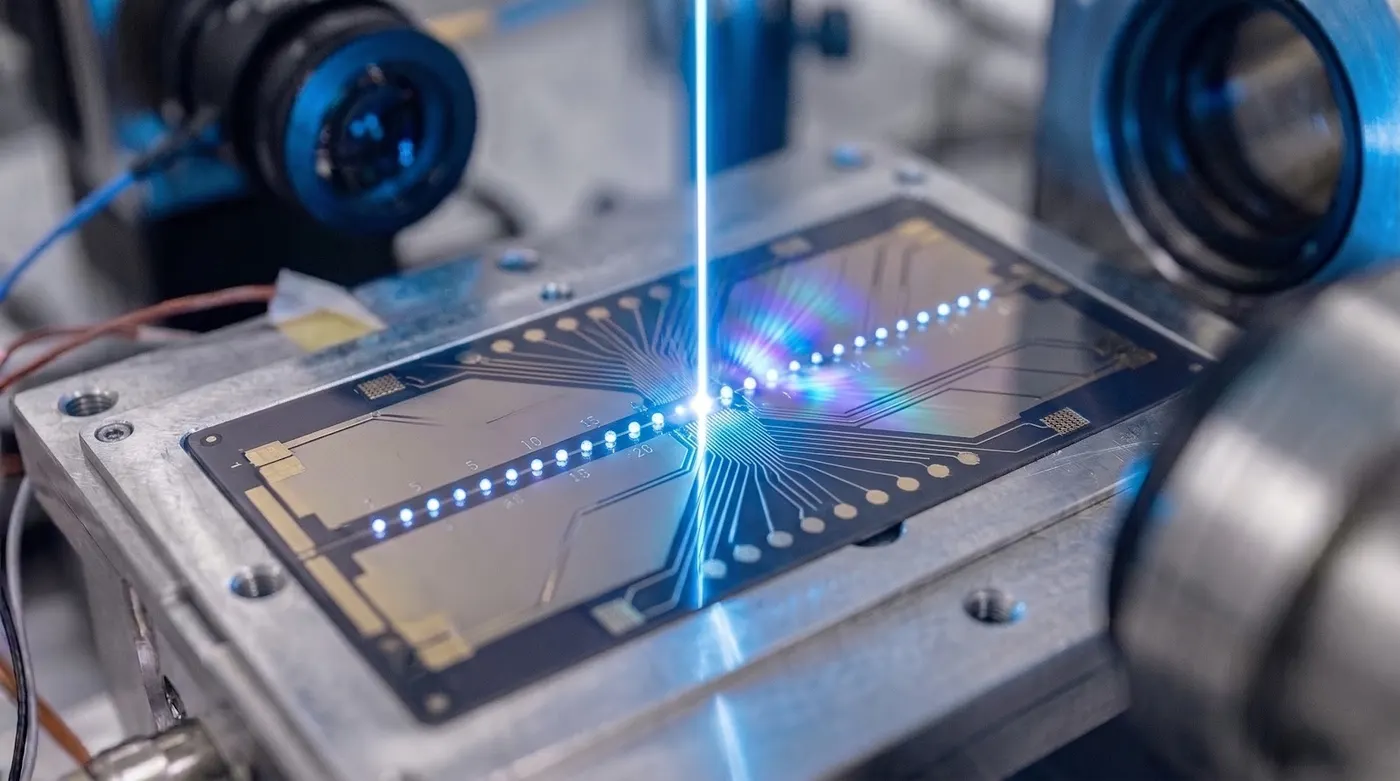
This is the second course in Purdue University’s Applied Quantum Computing series on edX, and it focuses on the physical hardware. It teaches how present-day material platforms are actually built to perform quantum information processing tasks, moving from the abstract qubit of the Fundamentals course to the engineering realities of real devices. It is free to audit, with a verified certificate available for a fee.
The course surveys the leading qubit modalities in depth: superconducting quantum platforms (the technology behind IBM and Google machines), atomic and trapped-ion platforms (IonQ, Quantinuum), and spin-based platforms in semiconductors. For each, it explains the physical principles, how qubits are encoded and controlled, and the engineering trade-offs that determine coherence, gate fidelity, and scalability. This makes it one of the more substantive hardware-focused MOOCs available.
Who is this for?
Students and professionals - particularly those with an engineering or applied-physics background - who want to understand quantum computers at the device level rather than only as abstract circuits. It is especially valuable for anyone considering work in quantum hardware engineering.
Prerequisites
Applied Quantum Computing I: Fundamentals is the stated prerequisite, alongside undergraduate linear algebra, differential equations, physics, and chemistry. A background in quantum mechanics or solid-state physics will make the hardware material far more accessible.
Topics covered
Start this course
Applied Quantum Computing II: Hardware (Purdue) is free on edX, at advanced level, and runs 5 weeks · 7-8 hours/week. A certificate is included.
Affiliate link. We may earn a commission at no extra cost to you.