Amazon Braket: AWS Quantum Computing Tutorials
11 free hands-on tutorials covering Amazon Braket, AWS's multi-vendor quantum computing service. Connect to IonQ, Rigetti, IQM, and QuEra hardware through one Python SDK, plus managed simulators and hybrid jobs.
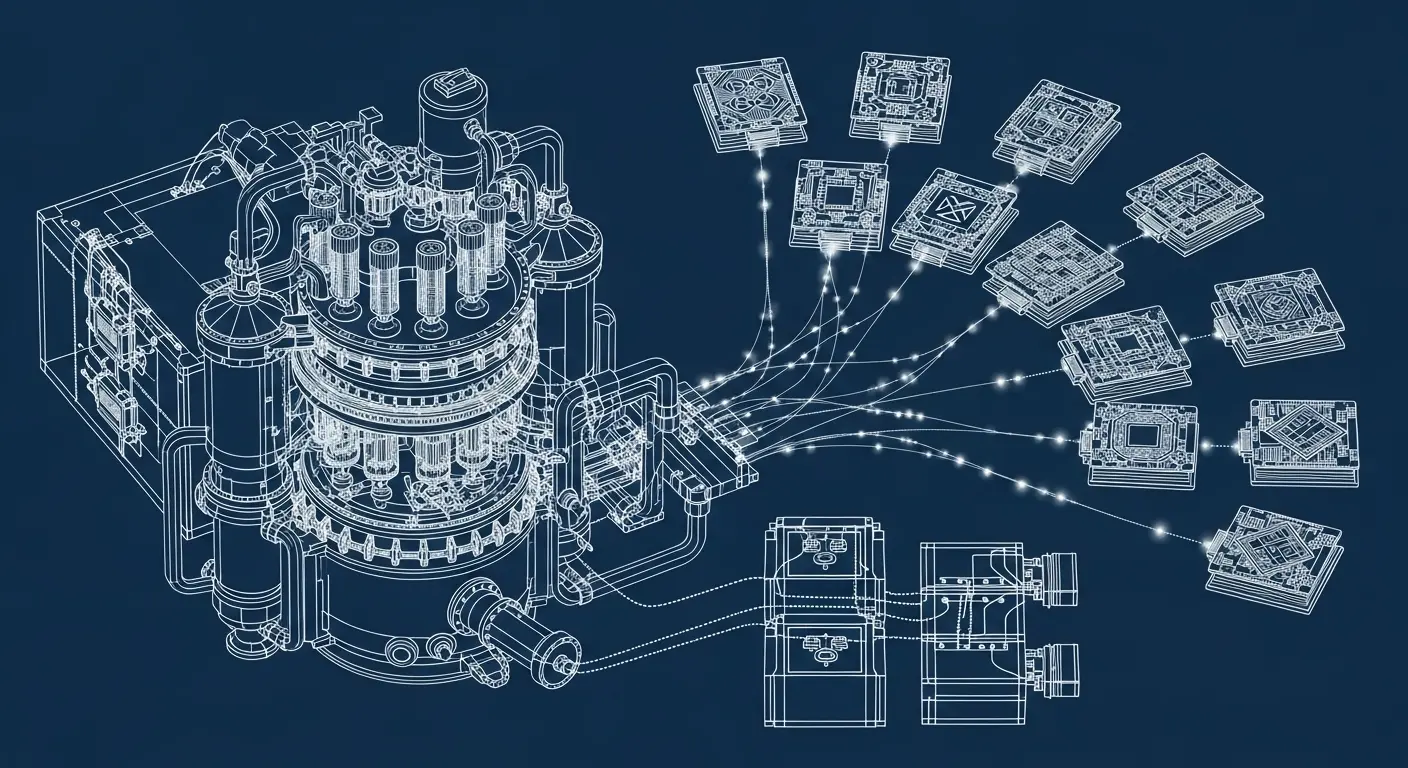
What to know about Amazon Braket
Amazon Braket is AWS's quantum computing service. Unlike IBM Quantum (which only runs IBM hardware) or Azure Quantum, Braket positions itself as the multi-vendor option: a single SDK and a single billing relationship for several different qubit technologies. Here's the practical picture:
- Multi-vendor hardware. Trapped ion (IonQ Forte, AQT IBEX Q1), superconducting (Rigetti, IQM), and neutral atom (QuEra Aquila) are all accessible from the same Python client. Useful for benchmarking circuits across architectures.
- Three managed simulators. SV1 (statevector), DM1 (density matrix for noise), and TN1 (tensor network for high qubit counts). The local simulator is free for prototyping; cloud simulators are billed per minute.
- Hybrid Jobs. Managed classical compute for VQE, QAOA, and other iterative loops. You define the algorithm in Python and Braket runs both the quantum and classical halves with priority device access.
- Verbatim circuits. Bypass Braket's transpiler and submit native gates directly to a device. Useful for running circuits exactly as designed and for benchmarking transpilation overhead.
- Pay-per-shot pricing. Real hardware is billed at $0.30 per task plus a per-shot fee. A 1,000-shot task on IonQ Forte runs about $80; the same task on Rigetti or IQM superconducting hardware costs under $2.
- Free Tier. AWS Free Tier includes one hour of cloud simulator runtime per month for the first 12 months on new accounts.
Amazon Braket tutorials
All 11 Braket tutorials, beginner to advanced
- beginner
Getting Started with Amazon Braket
Set up Amazon Braket, run circuits on the local simulator, and learn how to submit jobs to real quantum hardware on AWS.
- beginner
Amazon Braket Hello World
Run your first quantum circuit with Amazon Braket. Build a Bell state on the local simulator, then learn how to submit jobs to real quantum hardware on AWS.
- intermediate
Comparing Quantum Hardware on Amazon Braket: IonQ vs Rigetti vs IQM vs QuEra
Run the same benchmark circuit across multiple Braket hardware providers, compare noise levels, gate sets, connectivity, pricing, and latency.
- intermediate
Error Mitigation on Amazon Braket
Apply zero-noise extrapolation and measurement error mitigation techniques on Amazon Braket using local and density matrix simulators.
- intermediate
Quantum-Classical Hybrid Jobs on Amazon Braket
Run variational quantum algorithms using Amazon Braket Hybrid Jobs: managed classical compute + quantum access in one job, with checkpointing and cost tracking.
- intermediate
Using PennyLane with Amazon Braket
Connect PennyLane to Amazon Braket backends to run hybrid quantum-classical workflows, from local simulation to IonQ trapped-ion hardware.
- intermediate
Quantum Machine Learning on Amazon Braket
Train a variational quantum classifier on the Iris dataset using PennyLane with the Amazon Braket backend, including local simulation, SV1 managed simulator, and Hybrid Jobs for persistent classical-quantum training loops.
- intermediate
Getting Started with IonQ Aria: Trapped Ion Quantum Computing
IonQ Aria's 25-qubit trapped ion architecture, native gate set (GPi, GPi2, MS), cloud access options including Braket and Azure Quantum, circuit construction with native gates and transpilation, Aria vs Forte performance, and when trapped ion platforms beat superconducting alternatives.
- advanced
Analog Hamiltonian Simulation with QuEra Aquila
Program QuEra's Aquila neutral-atom processor through Amazon Braket to run analog Hamiltonian simulations with Rydberg blockade physics.
- advanced
Pulse-Level Quantum Control with Amazon Braket
Program quantum hardware at the pulse level using Amazon Braket's OpenPulse interface. Define custom gate sequences and explore native hardware calibrations.
- advanced
Verbatim Compilation with Amazon Braket
Run circuits on Amazon Braket without compiler modifications using verbatim compilation. Understand native gate sets and topology requirements.
Amazon Braket vs IBM Quantum and Azure Quantum
How Braket fits next to other major quantum cloud platforms
Braket strengths
- Single SDK across IonQ, Rigetti, IQM, AQT, and QuEra hardware
- Hybrid Jobs handle classical compute with managed orchestration
- Three managed simulators tuned for different problem types
- Verbatim circuit mode for native-gate control on supported devices
- Tight integration with the rest of AWS (S3, SageMaker, EC2)
Braket limitations
- No proprietary hardware - relies on third-party providers
- Pricing complexity (task + shot + simulator minute) makes budgeting harder than IBM
- Smaller learning resource ecosystem than IBM Quantum or Microsoft Learn
- No formal certification path (unlike IBM's Qiskit Developer)
- Real hardware queue times can be hours to days on popular devices
Frequently asked questions
- What is Amazon Braket?
- Amazon Braket is AWS's quantum computing service. It lets you submit circuits to multiple hardware providers (IonQ and AQT trapped ions, Rigetti and IQM superconducting, QuEra neutral atoms) plus managed simulators using a single Python SDK. Braket also includes Hybrid Jobs for variational and iterative algorithms with managed classical compute. See our Amazon Braket platform overview for hardware details.
- How much does Amazon Braket cost?
- The Local simulator is free. Cloud simulators (SV1, DM1, TN1) are billed per minute and per task. Real hardware is billed at $0.30 per task plus a per-shot fee that varies by device, from well under a cent per shot on superconducting hardware (Rigetti, IQM) to $0.08 per shot on IonQ Forte. Braket Hybrid Jobs charge for managed classical compute at standard EC2 rates. The Braket free tier includes one hour of on-demand simulator time per month for the first 12 months.
- How do I get started with Amazon Braket?
- Install the Braket SDK with
pip install amazon-braket-sdk, configure AWS credentials, and run a circuit on the LocalSimulator first. Once you're ready for cloud devices, enable Braket in the AWS console and create an S3 bucket for results. Our Braket hello world tutorial walks through the full setup in under 15 minutes. - Does Amazon Braket support Qiskit?
- Yes, indirectly. The qiskit-braket-provider package lets you use Qiskit circuits on Braket devices. PennyLane has tighter native integration via the PennyLane-Braket plugin (see our Braket-PennyLane tutorial). For maximum hardware control and access to features like Hybrid Jobs and verbatim circuits, the native Braket SDK is preferred.