
Brilliant
Applied Probability
Probability on Brilliant, from counting outcomes to the distribution a measurement returns. The Born rule sits on this.
8 Brilliant courses curated for the path into quantum computing. Interactive, visual lessons covering both the math prerequisites and quantum concepts themselves. A 7-day free trial covers the full catalog.
Brilliant is built around interactive puzzles rather than video lectures. Each lesson makes you click, drag, or answer something, which suits quantum concepts because so much of the difficulty is geometric, not a formula to memorise. Before you subscribe:
All 8 courses, beginner first
Brilliant
Probability on Brilliant, from counting outcomes to the distribution a measurement returns. The Born rule sits on this.
Brilliant
Complex numbers, amplitudes, phases, and the complex plane, as interactive problems. This is the notation a qubit state is written in.

Brilliant
Search, sort, Big O, and graphs, as interactive problems on Brilliant. The same counting is what you use when a quantum algorithm has a cost.

Brilliant
Deduction puzzles on Brilliant: order, negation, and working through cases. The same habits show up in proofs.

Brilliant
Brilliant's quantum computing course uses puzzles and pictures. It sits inside a Brilliant subscription, and the free trial includes it.
Brilliant
Brilliant / Sabine Hossenfelder
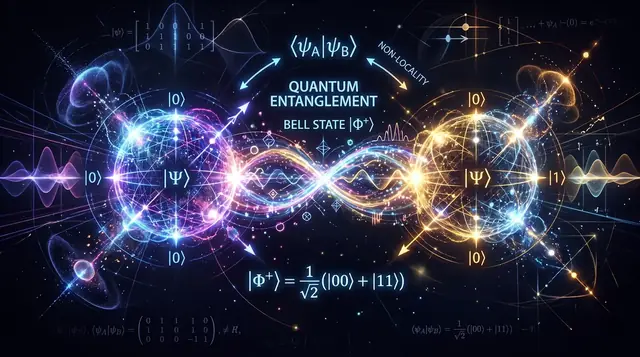
Quantum mechanics on Brilliant, with Sabine Hossenfelder. You work the simulations: states, superposition, and measurement.
Brilliant
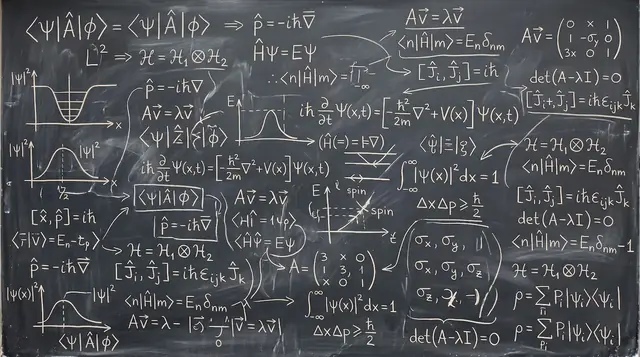
Vectors, matrices, transformations, and eigenvalues, as interactive problems. The linear algebra used to write gates and states.

Brilliant
Group theory on Brilliant. Symmetries, and the algebra used to write quantum gates and error-correcting codes.
How Brilliant fits next to Coursera, edX, Udemy, and IBM Learning