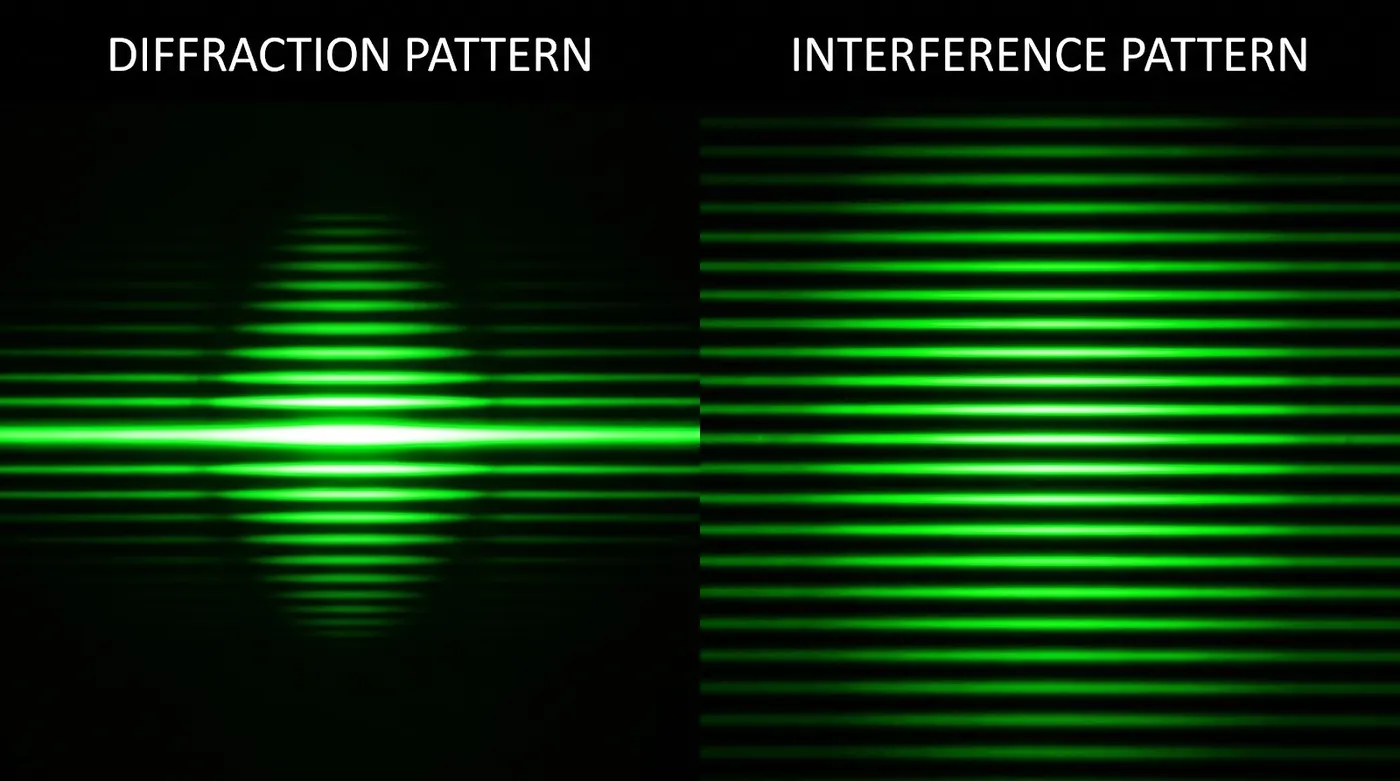
Quantum state amplitudes are complex numbers. Quantum interference relies on phases. Without comfort with the complex plane, quantum mechanics stays opaque no matter how good your intuition for other parts of the subject is.
This course builds exactly the fluency needed as a prerequisite for quantum computing study - not through dry calculation, but through Brilliant’s visual, interactive approach that makes complex numbers genuinely intuitive.
What you’ll learn
- What complex numbers are: why the equation x² = -1 has no real solution and how introducing i solves it
- The complex plane: representing complex numbers as points in two dimensions, with the real part on one axis and imaginary part on the other
- Arithmetic with complex numbers: addition, subtraction, multiplication, and division treated geometrically
- Polar form: expressing complex numbers as a magnitude (modulus) and angle (argument) instead of real and imaginary parts
- Why polar form is useful: multiplication becomes rotation and scaling, which maps directly to quantum gate operations
- Powers and roots: using polar form to compute powers of complex numbers and to find all the roots of an equation, including multiple roots
- Complex conjugates and division: what conjugates are and how they make division workable (later, in quantum mechanics, squaring the modulus of a complex amplitude gives the measurement probability via the Born rule)
Course structure
The course follows a build-up approach across 50 lessons and 647 exercises, organised into 11 levels. You begin with the motivation: some equations have no real solutions, and complex numbers arise naturally as the answer, with immediate geometric interpretation on the complex plane.
Arithmetic is covered first in rectangular form (a + bi), then revisited in polar form to show how multiplication becomes rotation and scaling - a much cleaner picture. Conjugates and division follow, and the later levels work up to powers and roots, where polar form really pays off.
The quantum payoff is something you bring with you: once amplitudes, phases, and the complex plane are second nature, qubit states like |ψ⟩ = α|0⟩ + β|1⟩ and the role of relative phase in interference stop being obstacles. Each concept in the course is explored through interactive diagrams before symbolic manipulation is introduced.
Who is this for?
- Anyone preparing to study quantum computing who wants mathematical confidence
- Students who covered complex numbers in school but never felt they truly understood them
- Self-learners who have tried reading quantum computing textbooks and got stuck on amplitudes and state vectors
- Anyone taking the Brilliant Quantum Computing or Quantum Objects courses who wants thorough preparation before starting
- Physicists returning to study who want a refresher with modern interactive tools
Prerequisites
Brilliant lists comfort with the cartesian and polar coordinate planes, quadratic equations, and basic trigonometry (sine and cosine) as assumed background. No calculus is needed. No prior exposure to complex numbers is assumed.
Hands-on practice
All practice is browser-based and interactive. You will:
- Drag points around the complex plane to see how operations move them
- Work multiplication and division problems geometrically, as rotations and scalings
- Enter complex number calculations and receive immediate feedback
- Solve powers-and-roots problems where polar form turns hard algebra into simple angle arithmetic
The emphasis is on building geometric intuition before algebraic fluency - you understand what an operation does before you practise calculating it.
Why take this course?
Complex numbers sit at the heart of every quantum computing formalism. A qubit’s state lives in a two-dimensional complex vector space. Quantum gates are unitary matrices with complex entries. Quantum interference, the phenomenon that gives quantum algorithms their power, is entirely a consequence of complex amplitude arithmetic - amplitudes for unwanted outcomes cancel while amplitudes for correct outcomes reinforce.
Without fluency here, every quantum computing textbook and course requires constant back-referencing to definitions. Brilliant’s interactive approach makes this fluency enjoyable to build. The course is self-paced, with 50 lessons you can work through in short sessions, and it will pay dividends across everything you study afterwards.
Topics covered
Enrol in this course
Complex Numbers is a paid course on Brilliant, at beginner level, and runs Self-paced.
Affiliate link. We may earn a commission at no extra cost to you.