A quantum dot earns its name from the quantization of electron energy that occurs when electrons are confined in a region comparable to their de Broglie wavelength, typically a few to a few tens of nanometers. In bulk semiconductor material, electrons occupy a continuous conduction band. As the confining dimension shrinks below about 100 nm in one direction, the energy spectrum in that direction becomes discrete, like the quantum mechanics of a particle in a box. Confining in all three dimensions produces a fully discrete spectrum, and the dot behaves like an artificial atom with tunable energy levels. The energy spacing between levels depends on dot size and material; smaller dots and materials with smaller effective electron masses produce larger level spacings and are more robust to thermal fluctuations.
Spin qubits: Loss-DiVincenzo and electrostatically defined dots
The most widely studied quantum computing application of quantum dots uses the spin of a single confined electron as the qubit. Daniel Loss and David DiVincenzo proposed this architecture in 1998: a two-dimensional electron gas formed at a GaAs/AlGaAs or Si/SiGe semiconductor interface is depleted by metallic surface gates to define isolated puddles, each holding one electron. The qubit is the spin- of that electron, with = spin up and = spin down. Single-qubit gates are performed by electron spin resonance using oscillating magnetic fields. Two-qubit gates exploit the exchange interaction: when two adjacent dots are pulse-gated to briefly increase their wavefunction overlap, the Heisenberg exchange coupling turns on, performing a operation that entangles the two spins. This gate requires no microwave resonators or laser pulses, operating purely through voltage pulses on nanosecond timescales.
Current performance and comparison to other platforms
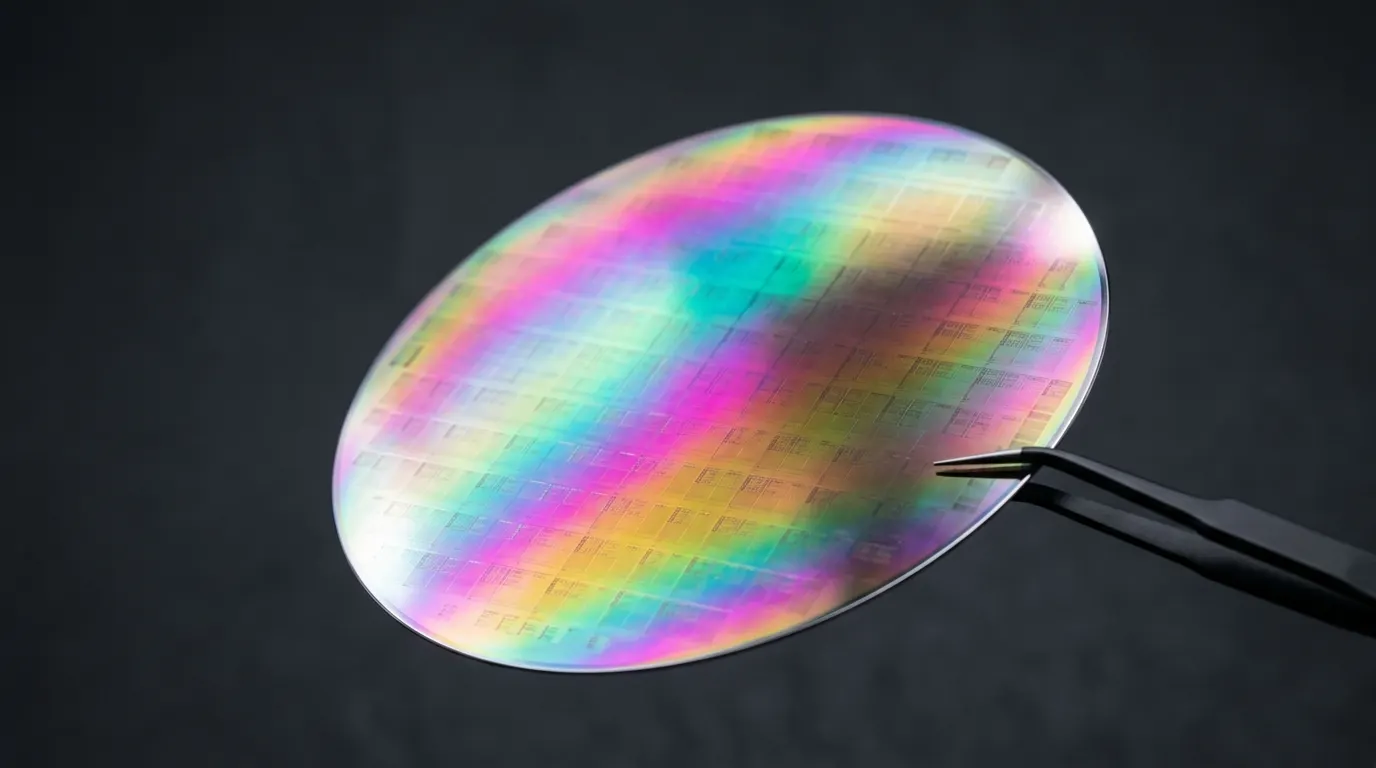
Silicon spin qubits have advanced substantially since the Loss-DiVincenzo proposal. Single-qubit gate fidelities above 99.9% and two-qubit gate fidelities above 99% have been demonstrated in Si/SiGe and Si-MOS dots, competitive with the best superconducting and trapped-ion results. The primary advantage of silicon spin qubits is compatibility with existing semiconductor fabrication: the same CMOS processes used to manufacture classical transistors can be adapted to produce quantum dots, raising hopes for integration of quantum and classical control electronics on the same chip. The primary challenges are qubit-to-qubit variability (dots are sensitive to charge noise from interface defects), the need for millikelvin cooling (unlike NV centers), and limited qubit connectivity since exchange coupling requires direct physical proximity of dots.
Quantum dot single-photon emitters
A separate class of quantum dots, typically self-assembled InGaAs dots grown by Stranski-Krastanov deposition, serves as near-deterministic single-photon sources for quantum networking and photonic quantum computing. When the dot is optically excited, it can emit exactly one photon per excitation cycle through the recombination of an electron-hole pair. Embedding the dot in a photonic crystal cavity or micropillar resonator enhances emission into a single mode via the Purcell effect, achieving photon collection efficiencies above 90% and photon indistinguishabilities above 99%. These properties make quantum dot sources the brightest and most coherent solid-state single-photon emitters available, with direct applications in linear-optical quantum computing, quantum key distribution, and the photon-generation modules of quantum repeater nodes.