IBM Quantum
Basics of Quantum Information (IBM Learning)
IBM's free interactive introduction to quantum information. Covers single and multi-qubit states, quantum circuits, and entanglement with interactive exercises.
Topic
15 courses · 3 tutorials
IBM Quantum
IBM's free interactive introduction to quantum information. Covers single and multi-qubit states, quantum circuits, and entanglement with interactive exercises.
Q-CTRL
Q-CTRL's browser learning platform. Twelve skills from superposition through programming, plus application modules such as logistics and finance. A free tier samples the beginner skills; Pro is listed at $9.99 to $19.99 USD per month.
Qubit by Qubit instructors (Stanford PhDs)
A two-semester year-long quantum computing course by The Coding School, taught by Stanford PhDs in partnership with Google Quantum AI. Free for partner schools; scholarships available for individual students.
edX
Diana Franklin (University of Chicago)
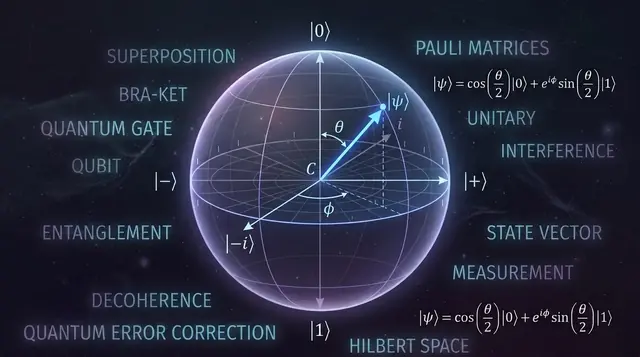
University of Chicago's edX beginner course from Diana Franklin. Basic algebra only. Quantum operations, qubit representation, measurement and superposition over five weeks. Audit is free; a verified certificate is paid.

Coursera
Packt
Packt on Coursera. Qiskit from the first gates through Deutsch-Jozsa, quantum cryptography, and teleportation.
edX
CertificateDelft University of Technology (QuTech)
A professional certificate from Delft University of Technology. Qubits, quantum hardware, algorithms, error correction, and the quantum internet.
IBM Quantum
IBM SkillsBuild
IBM SkillsBuild's free beginner learning content on quantum computing fundamentals. Visual learning activities and virtual labs covering qubits, superposition, entanglement, quantum gates, and basic circuit building.

Brilliant
Brilliant's quantum computing course uses puzzles and pictures. It sits inside a Brilliant subscription, and the free trial includes it.
Dr Steven Herbert, University of Cambridge
University of Cambridge's undergraduate Quantum Computing course, with lecture notes publicly available, covering qubits, superposition, entanglement, core quantum algorithms, and quantum cryptography. Accessible at no cost.
Coursera
Fractal Analytics (Srinjoy Ganguly, Shalini Devendrababu)
Fractal Analytics on Coursera, for beginners. Two modules: history and theory, then qubits, gates, and circuits in Qiskit.
Coursera
SpecialisationPackt
Packt specialization on Coursera, three courses. High-school maths to start, then Qiskit and algorithms on IBM hardware. No programming experience required.
Keio University / Rodney Van Meter
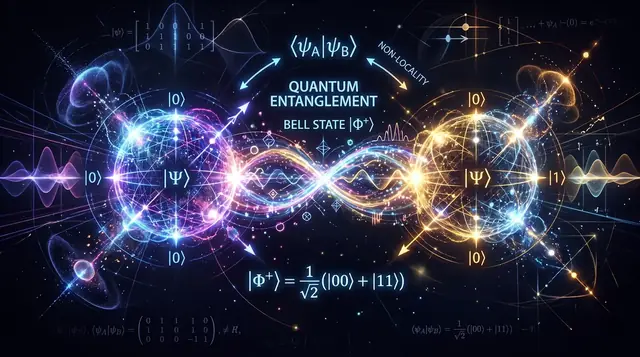
Keio University's accessible introduction to quantum computing on FutureLearn, taught by Rodney Van Meter. Explains the motivation for building quantum computers, the key principles, important algorithms, and a look at quantum hardware and the emerging industry, with minimal mathematics.

edX
Purdue University / Pramey Upadhyaya
The first course in Purdue University's Applied Quantum Computing series. Teaches the postulates of quantum mechanics and how they map onto present-day quantum information processing models including computation, simulation, optimization, and machine learning.
edX
Delft University of Technology (QuTech)
A Quantum 201 course from Delft. Quantum information written as circuits, and what you can do with entanglement.
Coursera
KAIST / Joonwoo Bae
KAIST's beginning-graduate-level introduction to quantum information, taught by Joonwoo Bae. Covers qubits, the axioms of quantum theory, entanglement as a resource, quantum teleportation, gates, circuits, and quantum communication channels.
A side-by-side comparison of classical bits and qubits: what makes a qubit fundamentally different, what it can and cannot do, and common misconceptions.
Cut through the hype and understand what actually separates quantum computers from classical ones, what problems they genuinely help with, and what realistic expectations look like.
A plain-English explanation of qubits, what makes them different from classical bits and why that matters for computing.