Program Structure and Strategic Motivation
The European Quantum Flagship launched in 2018 as part of the EU’s Future and Emerging Technologies (FET) program, committing 1 billion euro over ten years to prevent European dependence on US and Chinese quantum technology. The program is organized across four strategic pillars: quantum computing (gate-based and annealing hardware), quantum communication (QKD networks and quantum repeaters), quantum simulation (analog and digital simulation for materials and chemistry), and quantum sensing (gravimeters, magnetometers, atomic clocks).
QuantERA is the Flagship’s coordinating body for national research funding, aligning grant programs across 30+ agencies in EU member states, Israel, Turkey, and associated nations. This coordination prevents duplication and enables multi-country hardware-software co-design projects that no single national program could fund. The strategic contrast with the US approach (DARPA-driven with heavy defense orientation, supplemented by NSF and DOE) and China’s program (centralized 15 billion USD national investment in Hefei and Shanghai quantum hubs) is deliberate: the Flagship emphasizes open science publication requirements, pan-European industrial supply chain development, and integration with EU standards bodies for quantum-safe cryptography.
Key Hardware Projects
The Flagship funded the development of multiple distinct quantum hardware platforms across European labs and startups, avoiding over-reliance on any single technology:
European Hardware Landscape (2024):

Platform          Company/Lab       Status
-----------       ---------         ------
Superconducting   IQM (Finland)     54-qubit system; cloud and HPC installs
Cat qubits        Alice & Bob (FR)  Error-protected cat qubit prototypes
Neutral atoms     PASQAL (France)   100+ atoms, analog + digital modes
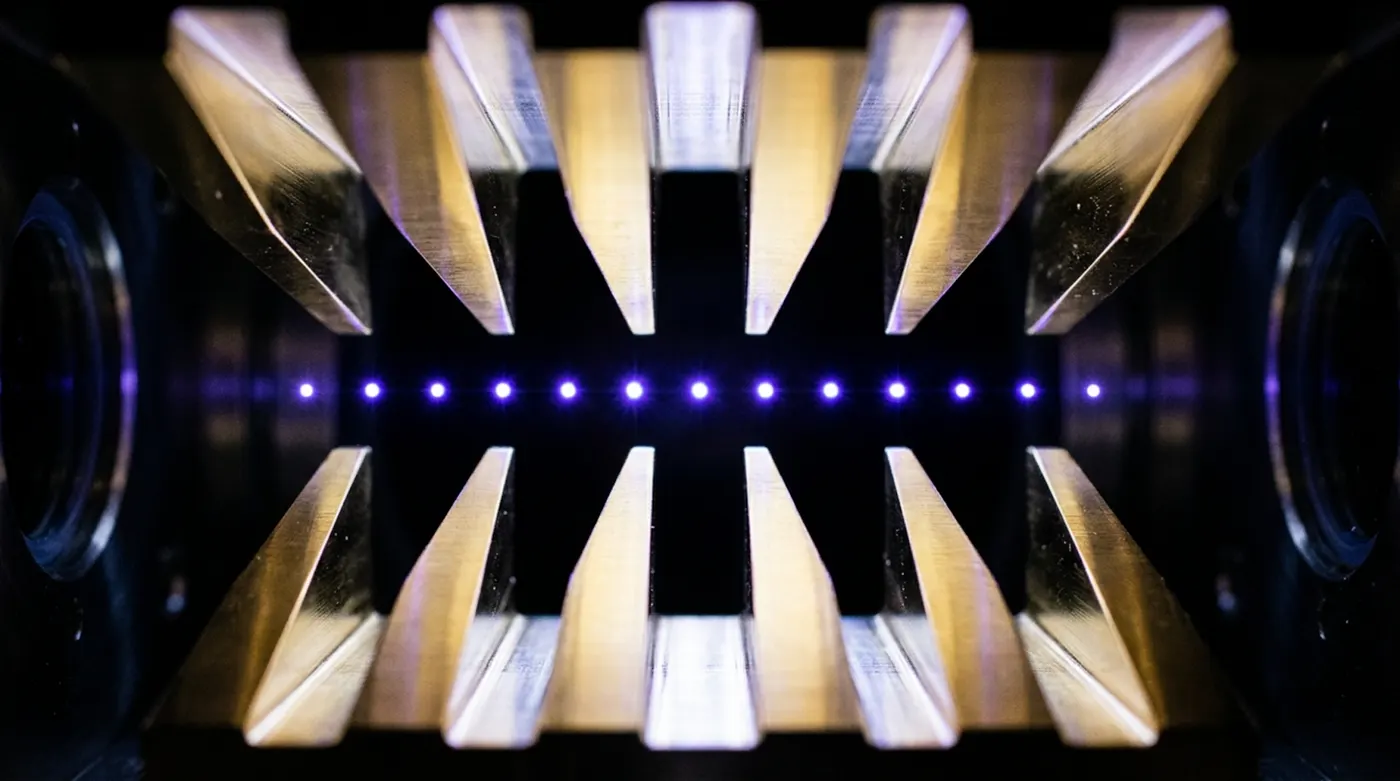
Trapped ions      eleQtron (DE)     Early commercial trapped-ion systems
Photonic          QuiX (NL)         20-mode photonic processor

OpenSuperQ target: 100-qubit superconducting processor (ETH Zurich / FZJ)
AQTION target:     50-qubit trapped-ion processor (Innsbruck / PTB)
PASQuanS target:   1000-atom neutral atom simulator (Institut d'Optique)
IQM’s 54-qubit superconducting processor, developed with VTT Technical Research Centre of Finland, is the most commercially deployed result: it provides cloud access through IQM’s quantum computing service and on-premises installations at several European HPC centers including CSC (Finland) and Leibniz Supercomputing Centre (Germany). The processor uses a proprietary star-connectivity topology that reduces swap gate overhead for certain optimization problems.
Quantum Internet Assembly (QIA) and Continental QKD
The quantum communication pillar produced two flagship results. First, QIA (Quantum Internet Alliance) is building a quantum internet testbed connecting Delft, Amsterdam, and Eindhoven in the Netherlands using nitrogen-vacancy center quantum repeater nodes, with the goal of demonstrating entanglement distribution across a metropolitan-scale network without classical trusted nodes. Second, the EuroQCI (European Quantum Communication Infrastructure) initiative is deploying a continental QKD network using satellite and terrestrial fiber links, with national testbed segments under construction across all 27 EU member states. It is one of the first attempts at a multi-country QKD infrastructure not relying on any single country’s network.
The QKD testbed is directly relevant to the security sector: it provides post-quantum-safe key distribution for critical infrastructure (power grids, financial clearing, government communications) as a defense against harvest-now-decrypt-later attacks. Integration with ETSI (European Telecommunications Standards Institute) QKD standards ensures interoperability between equipment from different vendors including ID Quantique (Switzerland), Toshiba Europe (UK), and Telefonica (Spain).
NEASQC and Industrial Applications
The NEASQC (Next Applications of Quantum Computing) consortium, an industry-facing Flagship project, evaluated NISQ quantum algorithms for 9 industrial use cases including drug design, energy grid optimization, natural language processing, and financial option pricing. NEASQC’s 2024 report concluded that no NISQ application demonstrated unambiguous quantum advantage over best classical algorithms for industrially relevant problem sizes, a candid assessment that shaped the Flagship’s pivot toward error-corrected hardware funding in its second phase (2024-2028). This honest accounting distinguishes the Flagship from some national programs that have overstated NISQ results.
The European quantum industry has grown rapidly since the Flagship launched in 2018 and now spans the full stack: hardware manufacturers (IQM, Alice & Bob, PASQAL, eleQtron), software and algorithm developers such as Multiverse Computing, quantum-safe cryptography vendors such as CryptoNext Security, and quantum sensing companies such as Q.ANT. This ecosystem depth is the Flagship’s most durable achievement, creating a self-sustaining innovation base independent of continued public funding.